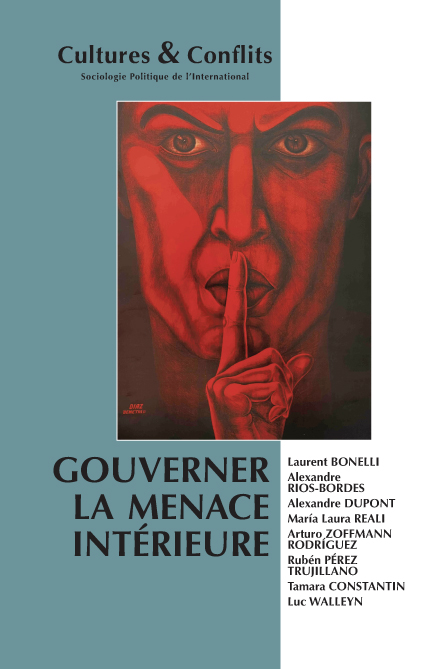
Modern democratic societies are often assumed to be pacified. Schematically, this implies that the realms of war and enmity are pushed outward, while within the internal order there remain only citizens and a single legitimate adversary: the criminal. Yet even a brief look at contemporary conflicts reveals the fragility of this division. It is these zones of tension that this issue seeks to explore, at the intersection of political science and history. It focuses on specific situations in which states confront forms of dissent that blur the boundaries between the criminal and the enemy. Drawing on cases ranging from the early nineteenth to the mid-twentieth century and from Argentina to the United States, including Spain, Switzerland, and France, the aim is to offer a social history of the “government of threat”: the multiple ways in which those who act and speak on behalf of the state respond to attempts to subvert the social and political order they seek to protect.